

Key takeaways
- Fear, not laziness, is the main reason leaders put off a difficult conversation at work — fear of the other person’s reaction, of getting it wrong, or of seeming unkind.
- A leader’s style creates a culture, whether they intend it or not. Reactive and directive styles make difficult conversations rarer; a Leader Coach style makes them normal.
- Coaching shows up in unplanned moments, not only in scheduled one-to-ones.
- You don’t always need every step of the GROW model. Once trust is established, a leader can move straight from Reality to Way Forward.
- A short, honest conversation beats a postponed one: teams report more clarity, more trust and less guessing about where they stand.
Why so many leaders avoid difficult conversations at work
Every leader has one: a conversation they know they should have had weeks ago, sitting quietly at the bottom of the to-do list. Not because it isn’t important, but because it’s uncomfortable.
That was the starting point for our second Difficult Conversations fireside chat, hosted by Senior Associate Giulio Tamaccaldi with our CEO, Tiffany Gaskell. Where the first session in this series looked specifically at mid-year performance conversations, this one opened the lens wider: what actually stops leaders from having open conversations at work, and what happens to a team when those conversations keep getting postponed.
How your leadership style shapes whether difficult conversations happen
Every leadership style creates a culture, whether a leader intends it or not. Giulio opened the session with Performance Consultants’ Performance Curve, which maps the impact of four different styles.
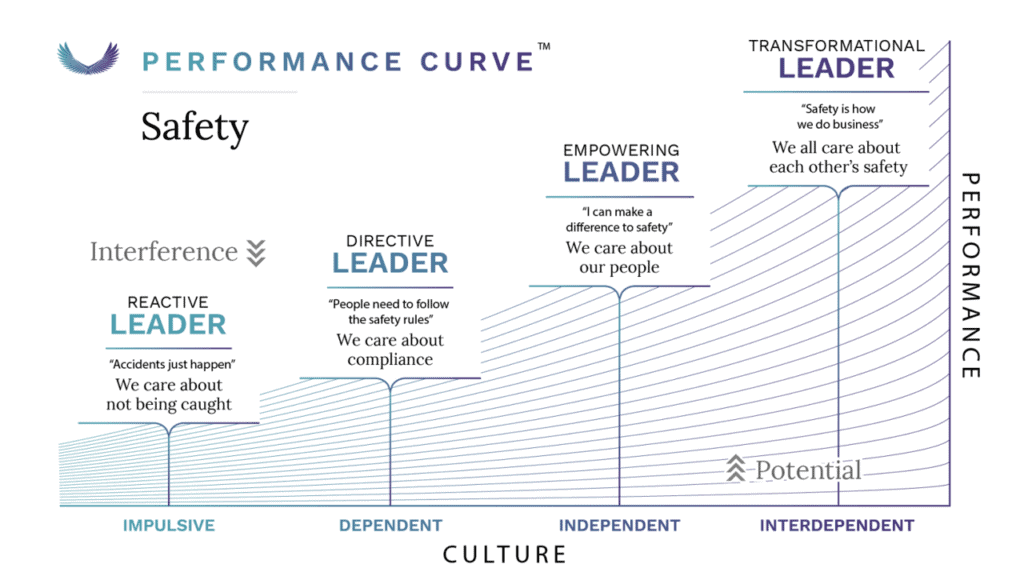
A reactive leadership style creates an impulsive culture, where difficult conversations rarely get planned because nothing much gets planned. A directive style creates a dependent culture built on rules rather than dialogue. Further along the curve sits an empowering style, which creates independence, but can leave pockets of competition between team members. And at the high end of performance sits a coaching leadership style, which creates an interdependent culture — the kind where a genuinely difficult conversation can happen without anyone needing to brace for impact first.
That interdependent culture is where the rest of the session lived.
The real reason leaders avoid the conversation they need to have
We asked the room directly, and the chat filled fast. Fear came up more than anything else, in every disguise it wears: fear of the person’s reaction, fear of getting it wrong, fear of being seen as unkind. Underneath the fear sat something simpler — a lot of leaders have genuinely never been shown how to do this. As Tiffany put it on the call:
“We’re not taught how to lead.”
People move into management carrying years of technical training and almost none in how to sit across from a colleague and name something hard without it landing as a verdict. So the conversation waits. And waiting has a cost, which the room named just as quickly: lost clarity, stalled trust, a team member quietly assuming the worst because nobody told them otherwise.
When we asked what changes when leaders do have the conversation, the answers came from lived experience rather than theory: clarity on both sides, higher trust, and a felt sense of being listened to, which several participants said mattered more than being agreed with. Further downstream sits the kind of engagement and focus that shows up in performance numbers, not just in how a team feels day to day.
Coaching shows up in unplanned moments, not just scheduled reviews
Tiffany shared a story from an airport sandwich shop that captured the point better than any framework could. Sitting at a shared table, she noticed the person across from her was staff at the chain, quietly fielding one colleague after another who came over to offload something during their lunch hour. Six people, one hour, all handing their problems to a manager who was creating space for them without seeming to try.
Tiffany couldn’t resist a comment: “You’re doing a fantastic job of leading.” His reply was immediate: “Tell me, what are you seeing?” A stranger in a sandwich shop, already coaching.
It’s a small story with a bigger point underneath it. A Leader Coach style isn’t a technique reserved for scheduled one-to-ones. It shows up, or doesn’t, in every unplanned moment a leader has with their people.
What a difficult conversation looks like in practice
The session’s centrepiece was a live demo inside Performance Studio, the practice environment built into Performance Hub. Tiffany took on the role of a manager checking in with Harper, a new team member whose pushback in a meeting the day before had left the team quiet and Harper feeling sidelined.
Harper is an AI avatar coachee, not a scripted chatbot. Nothing about her responses is predetermined, so what the room watched was Tiffany working through a genuinely unscripted conversation: staying with Harper’s defensiveness rather than smoothing over it, asking what Harper had noticed rather than telling her what to do, and inviting her to imagine the situation from further inside the team before asking what she’d have done differently.
One participant noticed that Tiffany hadn’t needed the full GROW model sequence to get there, moving from Reality straight into Way Forward once trust was established. That’s the kind of judgement a framework can support, but never fully script.
By the end of it, Harper had moved from bracing for another dismissal to naming, in her own words, what she’d try differently next time. Nobody was fixed. Nobody was managed. The conversation simply had somewhere to go.
Five things to do before your next difficult conversation
Drawing on the patterns from the session, here’s what to check before you start:
- Name the fear you’re avoiding. Is it the other person’s reaction, getting it wrong, or seeming unkind? Naming it takes away some of its weight.
- Ask before you tell. Open with what you’ve noticed or what they’ve noticed, rather than what you’ve already decided.
- Stay with the discomfort instead of smoothing it over. Defensiveness is information, not a signal to back off.
- Don’t force every step of a framework. If trust is already there, move straight to what happens next.
- Judge success by clarity, not agreement. A team member who feels heard, even in disagreement, is more valuable than one who simply nods along.
Watch the full fireside chat
The recording includes the complete, unscripted Performance Studio demonstration with Harper, our AI avatar coachee, the full discussion on why leaders avoid difficult conversations at work, and the Q&A that followed. Speakers: Tiffany Gaskell, CEO of Performance Consultants, and Giulio Tamaccaldi, Senior Associate.
Watch the recording if you missed the live session, or want to share it with your leadership team.
A free tool for your next difficult conversation
Several participants asked for something to take away and use before their next difficult conversation, not just after this one. We built the Courageous Conversation Canvas for exactly that moment: five questions to ask yourself before you begin, five steps to guide the conversation itself, and the exact language that opens a conversation up instead of closing it down.
Download the Courageous Conversation Canvas — a practical one-page guide to turning a difficult conversation into a GROW conversation, built from the same questions Tiffany used with Harper.
Related resources for people leaders
- The GROW model: a complete guide — the framework behind the Reality-to-Way-Forward shift in Tiffany’s demo with Harper.
- Read Part 1 of this series: mid-year performance conversations
- Coach certification course calendar — for leaders who want to build coaching skills formally.
- Explore Performance Studio and Performance Hub — request a demo.