
What is a Transformational & Coaching Leadership Style?
A transformational & coaching leadership style helps managers guide and support employees, using feedback and encouragement to help them discover and achieve their goals.

Transformational leadership focuses on coaching leaders to build strong cultures, support people’s growth, and achieve lasting results rather than just quick wins. It relies on teamwork, trust, care, and collaboration to help everyone reach their potential.
This style brings meaning and purpose together, helping everyone feel that success is shared.
A recent LSE Festival lecture explained that transformational leadership means connecting with others, understanding their needs, motivating them, and setting an ethical example. This helps people reach their potential and benefits individuals, teams, organisations, and society.
In short, transformational leadership is a practical coaching style that helps people grow, improves culture, and leads to lasting high performance with a strong focus on ethics.
Transformational leadership isn’t about being a hero or having a big personality. Performance Consultants summarise it as:
- Coaching rather than commanding
- Building trust, integrity, encouragement, innovation and coaching skills
- Shaping culture through everyday behaviour, not slogans
- Leading with purpose and lifting others as you go
You can learn and practice transformational leadership one step at a time, through every conversation and decision, to build a lasting, high-performing, people-focused culture.
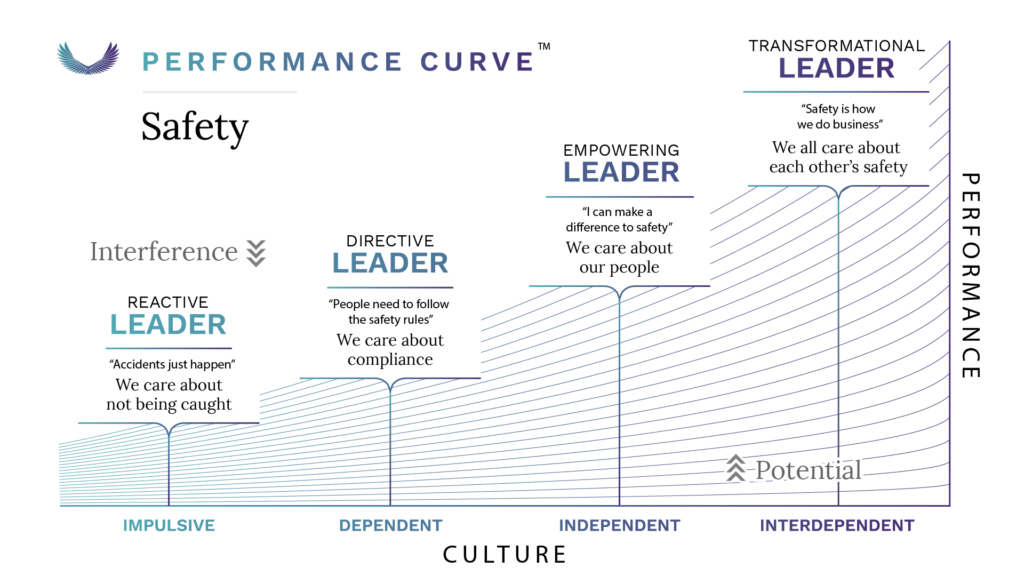
Transformational leaders move organisations up the Performance Curve™, towards cultures where people are interdependent, collaborative, consistently high-performing, and not driven by fear, control, or purely rewards.
How to Begin a Transformational Leadership Coaching Style
To start with a transformational coaching leadership style, it’s important to understand the different types of organizational development described in the LSE article.
Transactional Leadership
Focuses on the deal: “You hit the goal; I give you the reward.”
- Clear goals and rewards are important, but if you only manage through transactions, people usually do just what’s required, not their best work.
Pseudo-Transformational Leadership
- These leaders might seem charismatic and visionary, but their vision mainly benefits themselves.
- They focus more on personal power or status and may use others to achieve their goals.
Transformational Leadership
- The focus is on working together, growing, and acting ethically.
People follow these leaders because they trust them, feel valued, and see how their work matters.
The Top 5 Skills for Transformational Leadership
The LSE Festival talk highlighted five key skills for transformational leadership.
1. Build Trust
Transformational leaders are people others genuinely want to follow. Trust comes from:
- Having a clear, meaningful vision that people can understand
- Letting people participate in shaping that vision
- Following through on promises and being transparent when things change
2. Act with integrity
Transformational leaders articulate values as guiding frameworks for decisions and behaviour. It’s more than just having a values poster on the wall. It means:
- Using values to navigate trade-offs
Speaking up about behaviour that goes against those values, even when it’s uncomfortable
Modelling the standards you expect from others
3. Encourage Others
Motivation matters most in uncertainty. Transformational leaders:
- Provide resources and support
Invest in learning and development
Build real confidence through growth and coaching, not empty hype
4. Think Innovatively
Transformational leaders encourage people to think differently and question ideas. This helps with good decision-making and staying relevant. In a high-performance culture, that looks like:
- Seeing questions and constructive challenges as signs of engagement, not as insubordination
- Creating psychological safety, so people feel safe to raise ideas and risks
- Using coaching questions like “What options haven’t we considered?” to encourage new thinking
5. Coaching
Both the LSE article and Performance Consultants place coaching at the heart of transformational leadership. Coaching in this context means:
- Asking questions instead of providing all the answers
- Helping people clarify goals, explore reality, generate options, and commit to a way forward. This is the essence of the GROW ™ Model that Performance Consultants use.
Practical Coaching Tips for a Transformational Leader Style
Bringing together ideas from Performance Consultants, here are some practical steps you can use in your leadership:
1. Shift From Telling to Asking
In your next meeting, aim for at least three good questions for every one piece of advice.
2. Run Regular Coaching-style 1:1s
Try using the GROW model as a simple guide and focus on your team member’s ideas, not just your own solutions.
3. Co-create, Don’t Cascade, Vision
- Share a draft direction, then ask your team how they’d refine it and how it connects to their own goals.
4. Make Values Operational
- Choose one company value each month and ask, “What actions would show this value in our workplace?” Then notice and acknowledge those actions.
5. Be Deliberate About Sponsorship
- Every few months, make a list of people you’ve recommended for opportunities. If someone is missing, make an effort to include them.
6. Model Learning and Vulnerability
- Be open about your mistakes, share what you’re learning, and ask for feedback. This shows that growth is a normal part of work.
In Summary
As our own Performance Consultants Mark Drummond (Chartered Psychologist, ICF ACC Coach) wrote:
“Leaders who adopt this style lead by example, earning trust and respect, and they paint a vision that gets people excited about what they’re working toward together. They also create an environment where people feel free to think outside the box and approach challenges in new ways. On top of that, transformational leaders make time to coach and support each person individually, helping them reach their potential. Altogether, these qualities motivate people to stay engaged and resilient, which leads to growth and success for both the team and the organisation.”
You can practice transformational leadership step by step, through each conversation and decision, to build a lasting, high-performance, people-focused culture.
Transformational Leader Program
Our Transformational Leader program teaches these coaching and feedback skills. When used regularly, there is strong evidence of good results and positive culture change. It helps teams improve by building new habits, conversations, and ways of thinking over time.