
The GROW™ Model: A Complete Guide to Goals, Reality, Options and Will
The GROW™ model is one of the most widely used coaching frameworks in leadership, performance development and organizational transformation. It provides a simple yet powerful structure for guiding meaningful conversations that help individuals clarify goals, reflect on their current situation, explore possibilities, and commit to action.
This guide walks you through the model step by step, provides practical questions you can use right away, and shows how GROW can support effective coaching and leadership.

What Is the GROW Model? A Simple Definition
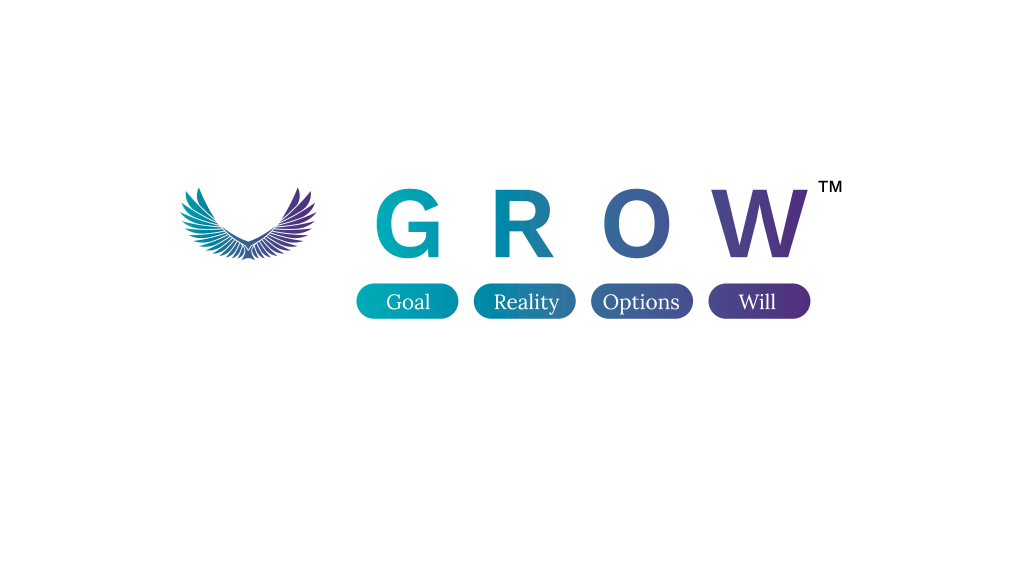
The GROW model is a coaching and problem-solving framework that follows four stages:
- G – Goals: Define what you want to achieve
- R – Reality: Understand the current situation
- O – Options: Explore possible choices
- W – Will / Way Forward: Decide what actions you will take
GROW’s Coaching Pioneer
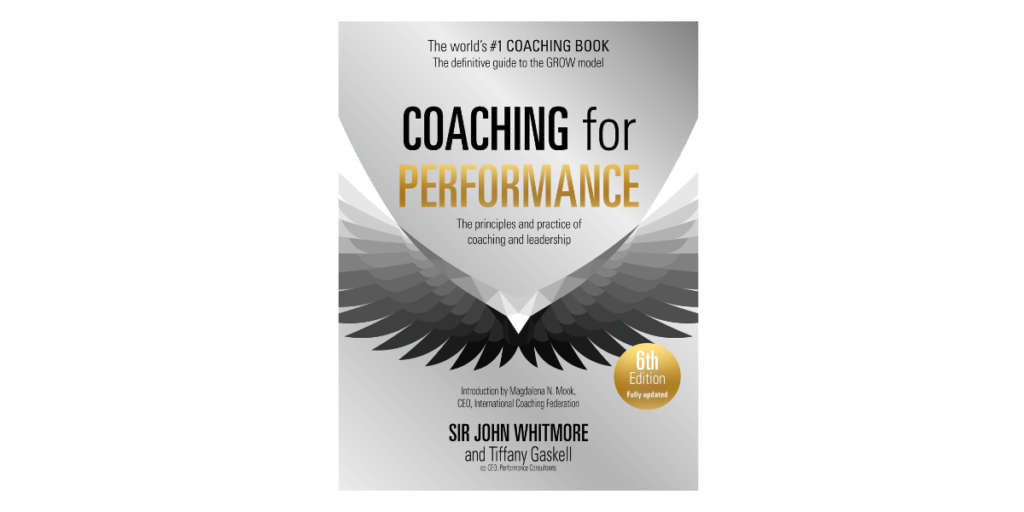
Developed with his peers by our founder and coaching pioneer Sir John Whitmore, the model became globally recognized through Whitmore’s book Coaching for Performance. Today, GROW remains foundational for coaches, leaders and organisations seeking a practical way to support development and performance.
How the GROW Model Works (Explained Step-by-Step)
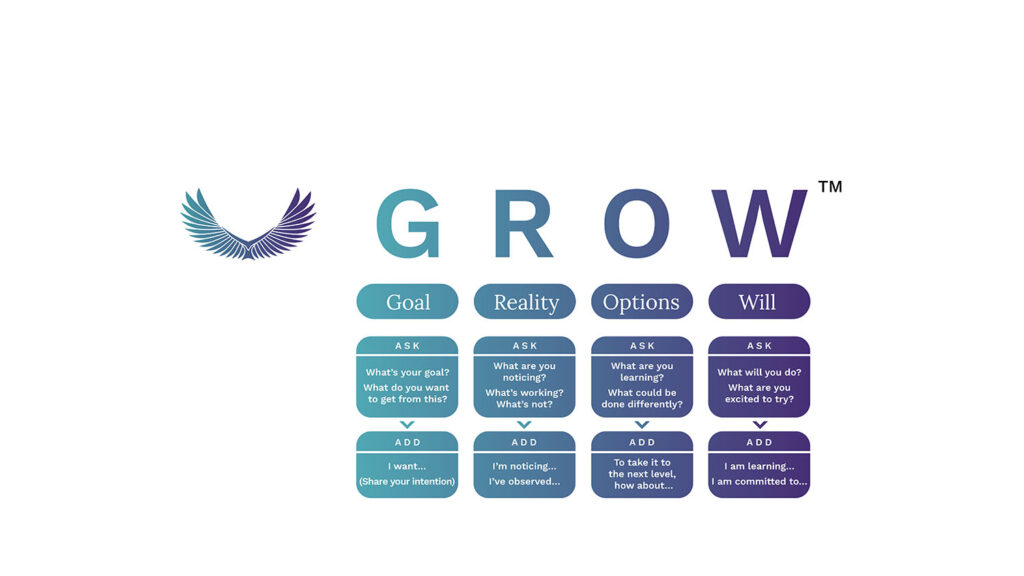
GROW is built around a natural thought process:
- Start with a clear goal
- Understand the present reality
- Consider different options for progress
- Commit to the next steps.
Even though the steps are shown in order, coaching conversations often move between stages as new insights arise.
The Four Stages of the GROW Model
Step 1 – Goals: Defining What You Want to Achieve
The conversation starts by making the goal clear. This could be a performance target, a change in behaviour, a learning goal, or a long-term aim.
Effective goals are:
- Clear and specific
- Personally meaningful
- Achievable within a realistic timeframe
- Aligned with wider professional or organisational aims
Example questions:
- What would you like to achieve?
- What will success look like?
- Why is this goal important to you now?
Step 2 – Reality: Understanding the Current Situation
Next, the conversation explores the current situation. This allows the individual to assess their starting point honestly and gain insight into what is already working and what isn’t.
Areas to explore may include:
- Current behaviours and outcomes
- Strengths and resources
- Barriers or constraints
- Relevant facts, evidence or data
Example questions:
- What is happening right now?
- What progress have you already made?
- What challenges are you facing?
- What assumptions might you be holding?
Step 3 – Options: Exploring Different Options for Progress
Once the goal and current situation are clear, the coach and the individual review possible actions. The aim is to encourage new ideas, not to give set answers.
Encourage creativity and a non-judgmental exploration of possibilities.
Example questions:
- What options could you consider?
- What else might work?
- What would you try if resources or obstacles were not an issue?
- Who or what could support you?
Step 4 – Will: Committing to Action and Accountability
The last step of the GROW model is about turning ideas into real commitments.
At this stage, you turn your insights into action by deciding what will happen and when.
This often includes:
- Specific actions the individual will take
- Timeframes
- Measures of progress
- Accountability structures
Example questions:
- What will you do first?
- How committed are you on a scale of 1–10?
- What might get in the way, and how will you respond?
- How will you hold yourself accountable?
GROW Model Questions for Coaching and Leadership
Asking thoughtful, open questions is key when coaching with GROW.
.

Here are examples for each stage:
Goals
- What outcome do you want?
- How will you know when you’ve achieved it?
Reality
- What is working well already?
- What evidence do you have?
Options
- What ideas have you considered so far?
- What are the advantages or disadvantages of each option?
Will
- Which option will you commit to?
- When will you start?
These questions help people reflect, gain insight, and take ownership of their actions.
When to Use the GROW Model in Leadership, Coaching and Teams
The GROW model is flexible and works well in many situations, such as:
- One-to-one coaching conversations
- Performance reviews
- Career development discussions
- Team coaching
- Problem-solving sessions
- Self-coaching
It works best when someone already has a challenge, goal, or decision they want to explore.

Benefits of the GROW Model for Coaches and Managers
The GROW model helps with:
- Clarity – people articulate what they want with greater precision
- Insight – exploring reality uncovers patterns, assumptions and opportunities; it also helps with gap analysis, clearly revealing the difference between Goal and Reality
- Creativity – structured brainstorming broadens options
- Commitment – individuals take ownership of their actions
- Performance – coaching becomes more focused and impactful
These benefits lead to stronger leadership and help build a culture of ongoing growth.
Common Mistakes When Using the GROW Model (and How to Avoid Them)
Even simple frameworks like GROW can be used incorrectly. Common mistakes include:
- Jumping into solutions too quickly
- Treating GROW as a rigid sequence
- Leading the individual instead of enabling discovery
- Setting goals that are too vague
- Neglecting to establish accountability
Avoiding these mistakes helps preserve the model’s integrity and effectiveness.
FAQ Grow Model
1. Where the GROW™ Model Came From: A Short History
The GROW model was created in the late 1980s and early 1990s by coaching expert Sir John Whitmore and his peers. Early coaching programs that combined performance psychology, goal-setting, and ideas about human potential helped shape the model.
Its widespread adoption came through Whitmore’s Coaching for Performance, which established GROW as a core framework for modern leadership and coaching practice.
It is worth noting that Sir John Whitmore famously said that “any dictator can use GROW”, stressing that the framework is not to be employed in isolation by anyone, but in conjunction with coaching skills.
2. GROW vs Other Coaching Models
A skilled coach will naturally be able to draw on frameworks used in the industry depending on the needs of the client.
For example:
- TGROW
- OSKAR
- CLEAR
By comparing models, coaches can pick the structure that best fits their needs.
3. Is the GROW Model Only for Coaching?
No. It is widely used in leadership, mentoring, performance management and personal development.
4. Can the GROW Model be Used in Short Conversations?
Yes. Even five minutes of structured questioning can produce valuable insight.
5. Is GROW Suitable for Teams?
Absolutely. Teams can collectively define goals, realities, options and commitments.
6. Can I Use GROW for Self-Coaching?
Yes. Many people use GROW for personal reflection and decision-making.
7. Do I need a licence to use the GROW model?
The GROW model and its associated copyrighted materials are protected by intellectual property rights. To use the original GROW™ model, co-developed by our founder Sir John Whitmore, you need to obtain a licence from Performance Consultants. To request a licence please use the Contact Us form and someone from our Permissions & Publishing Team will follow up with you. Please include:
– A description of who you are, including your organization’s full name and registered address
– A description of your content
– How you intend to use the content (e.g. in a coaching program, seminar, book, printed or online course materials)
– How long you’ll use the content for
– The audience and number of people who will access the content
– The country or countries in which the content will be used