How Does the Mindset of Leaders Impact Safety?
Leader mindset and safety culture: why rules aren’t enough and how coaching builds the interdependent teams that prevent incidents
Why Rules Alone Are Not Enough
Safety rules are in place in almost every organization. So why do people still get hurt?
The real issue is rarely the rule itself. What matters is whether people truly take ownership of it or just follow it because someone is watching.
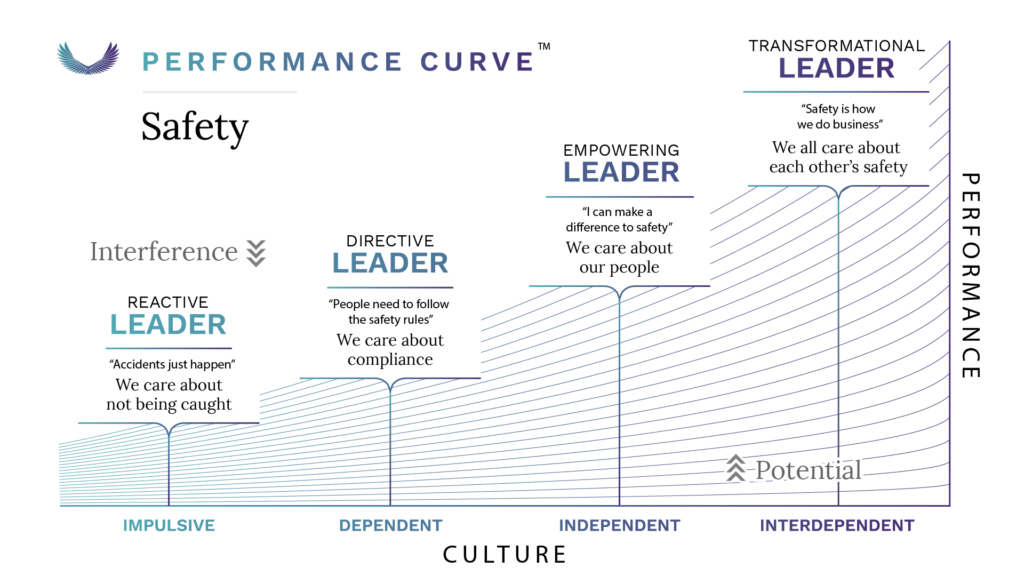
In a dependent culture, compliance is conditional. People do what’s expected when someone is watching, but take shortcuts when the pressure is off. This policing approach to safety is not just fragile; it’s dangerous.
From Instruction to Interdependence
To move up the Performance Curve, leaders need to shift from issuing instructions to coaching their teams:
Instruction Creates Dependency
When people are told exactly what to do, they don’t take ownership. The unspoken message becomes: that’s not my problem.
Coaching Builds Shared Responsibility
It encourages people to find their own safest way of working and to care if their colleagues do the same.
Are you Ready to Change Your Safety Culture?
The Power of a Small Intervention
While working with a global oil company, a colleague saw someone walking downstairs with both hands full, which broke the “hold the handrail” rule. Instead of giving a reprimand, they simply said: “Can I carry something so you can hold the rail?”
No Judgement. No Blame. Just Authentic Care
That is what an Interdependent safety culture looks and feels like. When safety is a shared value, not simply a policy, people feel safe enough to address small risks. When teams handle these small moments with trust, they are ready to respond when something serious happens.
Leadership as Culture, Not Compliance
A strong safety culture starts with leaders who:
* Role-model safety behaviours every day, not just in official settings
* Respond to incidents with review and learning, not blame and punishment
* Help every team member understand why their work matters
As the NASA janitor famously said when asked what he did for a living: “I’m helping put a man on the moon.” When people connect their daily actions to a bigger purpose, safety stops being a checklist. It becomes something everyone owns.