What is Coaching?
A Brief History and Definition
The question ‘What is Coaching?’ goes right to the heart of the work done by Performance Consultants International. While coaching may be a familiar term, many people understand the role of a coach in terms of instruction and teaching. We consider that to coach is not simply to teach, but rather to guide and to aid an individual to maximize their own potential. ‘What is coaching?’ cannot be answered simply as a ‘one size fits all’ dogma as a teacher uses a curriculum, but rather a journey that is tailored to an individual’s strengths, needs and desires.

The word ‘coach’ in the question ‘What is Coaching?’ is thought to be Hungarian in origin, deriving from the small town where coaches were first built. It is thought that the term became synonymous with tutelage soon after, as the vehicle guides a passenger to its destination as a coach guides a learner along a path of study towards their goal. Furthermore, travelling by horse-drawn coach was not the rapid travel we enjoy today, but often a process taking several hours or even days. To coach with a learned or respected individual, or even a tutor, was to receive their knowledge and wisdom throughout the course of the journey, possibly leading to our modern understanding of the term ‘coaching’.

At Performance Consultants International, we understand the question ‘What is Coaching?’, not as the role of a traditional, for example, sports coach, that, like the horse-drawn coach takes passengers along a set route towards previously defined and universal goals and a set destination, but rather, using the last example as a metaphor, to sit beside a coachee and embark on a journey, imparting our knowledge and experience and drawing attention to relevant landmarks along the way, facilitating fulfilment and the maximisation of potential.

While the question ‘What is Coaching?’ may have meant little to our ancestors, coaching has been practised throughout history in some form by those who naturally trust, respect and believe in the potential of others. A good leader has long taken the time to listen, challenge and support others, in order that they may perform to the best of their potential. Executive coaching and coaching as a discipline and profession is, however, relatively new. The first application of coaching in a business context was pioneered in the 1980s by Sir John Whitmore, Executive Chairman of Performance Consultants International, and his colleagues. After training with Harvard educationalist Tim Gallwey, author of The Inner Game of Tennis and The Inner Game of Work, in the USA, Sir John founded the Inner Game in the UK and formed a team of Inner Game coaches. These leading exponents of business coaching today answer the question ‘What is Coaching?’ as:

"Coaching is unlocking a person’s potential to maximize their own performance. It is helping them to learn rather than teaching them"

Since the 1980s, the academic and business community has embraced and built on these ideas, and coaching can now be studied to PhD level.

‘What is Coaching?’ may still mean something different to the traditional sports coach that seeks to instruct a player based solely on their own knowledge, perception and experience, yet Tim Gallwey, Sir John Whitmore and many others now working in the business arena started out in the sporting environment. In his ground-breaking books, Tim Gallwey challenged traditional sports instruction by claiming that a coach’s role was to help a player remove or reduce the internal obstacles to their performance in order to release an unexpected natural ability without the need for much technical input from the coach. While sports coaching remains largely rooted in old behavioural models and instruction, modern business coaching techniques seek a better way, by embracing these ideas and seeking to eliminate internal obstacles to performance, learning and enjoyment.

‘What is Coaching?’ may be explained, in essence, as raising awareness and responsibility, two vital ingredients of performance. Awareness increases input, interest, learning and recall. Responsibility is generated by offering choice, which leads to self-esteem, confidence and self-motivation. Both awareness and responsibility are states of mind, and therefore the mind is key to unlocking potential. Knowledge and experience are important for performance but neither is as important as the state of mind. By focussing on this, coaching enables an individual to look to future possibilities, thus leaving behind past mistakes and any limiting beliefs.

The fundamental difference in the explanation of ‘What is Coaching?’ between traditional instructional coaching and modern coaching is often a matter of choice. One approach offers dogma, the other encourages free will. Offering choice not only values the individual but also capitalizes on the unique qualities and contribution of each individual.
Often in the past these differences were actively discouraged in the workplace for the sake of control, standardized systems, ease of management and often even because management thought they already knew the best approach to any given problem or situation, which should be universally followed regardless of an individual’s unique talents.

Standardization was key to growth and success in the 1900s, giving us mass production, economies of scale and ease of control and management. However, it also had side effects, including over-control which created cultures of blame and criticism and low individual buy-in, disaffection and stress in the workplace because of the loss of choice and responsibility. Ironically, standardization created poor performance.

In recent years the question ‘What is Coaching?’ has caused many global organizations to question this ‘one size fits all’ approach to the workplace, and senior executives around the globe have recognised the benefits and opportunities created through developing authentic coaching behaviours, thus increasing both productivity and job satisfaction. Today many organizations choose to partner with a professional coach, and some learn coaching principles and skills to help maximize their own and their team’s personal and professional potential. The transformational impact of developing self-leadership and coaching principles and behaviours can be seen across the board, in all interactions and areas of organizations. Replacing traditional hierarchical management structures with a coaching management style and culture integrates both meaning and purpose, facilitating high awareness and responsibility, belief, passion and happiness in all staff, helping staff at all levels to feel fully engaged and mobilize collaboration.

What is Coaching?
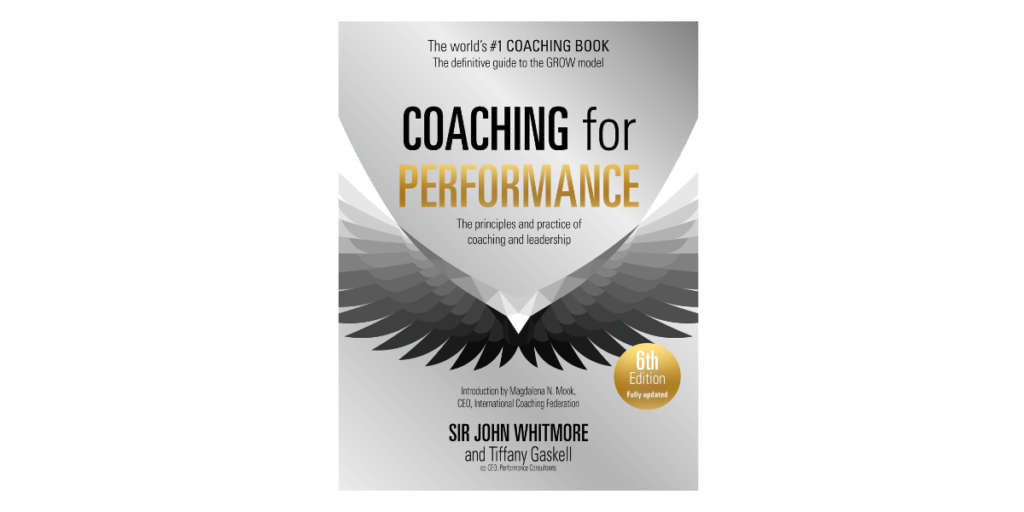
By Sir John Whitmore, Coaching for Performance
Coaching is as much about the way things are done as about what is done. Coaching delivers results in a large measure because of the supportive relationship between the coach and the coachee, and the means and style of communication used. The coachee acquires the facts, not from the coach, but from within himself, stimulated by the coach.

Coaching is unlocking people’s potential to maximize their own performance. It is helping them to learn rather than teaching them. We all have built-in, natural learning capability that is actually disrupted by instruction. This idea is not new: Socrates had voiced the same concept some 2,000 years earlier, but some how his philosophy got lost in the rush to materialistic reductionism of the last two centuries. The pendulum has swung back and coaching, if not Socrates, is here to stay for a century or three yet!

What is Coaching?
By Tim Gallwey, The Inner Game
Coaching is an art that must be learned mostly from experience. In the Inner Game approach, coaching can be defined as the facilitation of mobility. It is the art of creating an environment, through conversation and a way of being, that facilitates the process by which a person can move toward desired goals in a fulfilling manner. It requires one essential ingredient that cannot be taught: caring not only for external results, but also for the person being coached.

The Inner Game was born in the context of coaching, yet it is all about learning. The two go hand in hand. The coach facilitates learning. The role and practices of the coach were first established in the world of sports and have been proven indispensable in getting the best performance out of individuals and teams. Naturally managers who appreciate the high levels of individual and team performance among athletes want to emulate what coaching provides.

What is Coaching?
By David Hemery CBE, Sporting Excellence
The coach or indeed the manager’s role is to create the best quality of relationship with the performer or staff. This recognizes that coaches and managers as coaches should do less telling and more asking and listening. Because we cannot be on the field of play or with each member of staff at all times during the events of sport or business, the responsibility is primarily in the hands of the performer.

The central message of excellence in sport are focused around five key issues:

• Ownership of or responsibility for the goal
• The level of self-awareness that can be achieved
• The ability for concentration focused attention one can bring to bear
• Your own internal motivation to achieve goals
• Your ability to be relaxed and minimize stress

Bookmark and share with:

Facebook Linked in del.icio.us Twitter MySpace Google Yahoo! My Web Gmail
 

Open Programmes

Coaching for Performance
Level 3 | Advanced | London

Module 3, Feb 23–24 2012

Coaching for Performance
Level 2 | Intermediate | London

Module 1, May 24-25 2012
Module 2, June 28-29 2012
Module 1, Nov 15-16 2012
Module 2, Feb 7-8 2013

Join our newsletter

* Your email address:
* Preferred Format:
Name First:
Name Surname:
Company Name:
Country:
*  How did you find us?:
 
* Enter the security code shown: